
Blockchain & Innovation
Everyone talks about Web3.
Almost nobody takes the time to explain what comes next.
That is exactly why I use the term Web4.
Not as a fashionable label. Not as a slogan. And definitely not as another way to create hype.
For me, Web4 is about a shift in focus. It is about moving away from noise, short-term attention, and purely speculative narratives, and moving toward something much more important: infrastructure.
If Web2 was dominated by centralized platforms and Web3 pushed the conversation toward ownership, tokens, and decentralization, then Web4 is about what happens when decentralized systems are judged by their real-world utility, efficiency, practical design, and capacity to support real-world use.
That is the difference many people still miss.

From narrative to infrastructure
One of the biggest problems in the blockchain space is that many people still evaluate projects almost entirely through narrative.
They look at branding.
They look at excitement.
They look at the price.
They look at community hype.
But long-term value is not built on narrative alone.
It is built on infrastructure.
It is built on systems that can actually support activity, developers, tools, applications, and real use cases.
This is why I believe the Web4 conversation matters.
It pushes attention away from empty language and toward practical questions.
Questions like:
What kind of network is being created?
How much energy does it consume?
How accessible is it for builders?
What kind of ecosystem can grow on top of it?
What problems does it actually try to solve?
These are infrastructure questions, and they are far more important than most people realize.
Web4 is not just a new label
A lot of people hear a term like Web4 and immediately assume it is just another attempt to rename the same conversation.
That is fair.
The blockchain space has created too many buzzwords over the years, and people are right to be skeptical.
But the way I use the term Web4 is different.
I use it to describe a stage where the important questions are no longer only:
Who owns the token?
Which chain is trending?
What is pumping right now?
Instead, the questions become more serious:
How is the infrastructure built?
Can people and businesses actually use it?
Is it efficient?
Is it scalable?
Does it solve a real problem?
Can it support applications, ecosystems, and long-term adoption?
That is where the conversation becomes more mature.
What infrastructure really means here
When I say infrastructure, I do not mean something abstract.
I mean the real foundations that enable decentralized systems.
That can include validator networks, node architecture, consensus models, efficiency, developer tools, application environments, data systems, ecosystem interoperability, and broader system design.
For most people outside the technical world, these details can feel distant.
But they matter.
Because infrastructure determines whether a system is just a story or can actually function over time.
A project may sound impressive on social media, but if the infrastructure is weak, unsustainable, expensive, or impractical, the long-term vision falls apart.
This is why I often tell people that the future will not be built on hype.
It will be built on infrastructure.
Web3 versus Web4
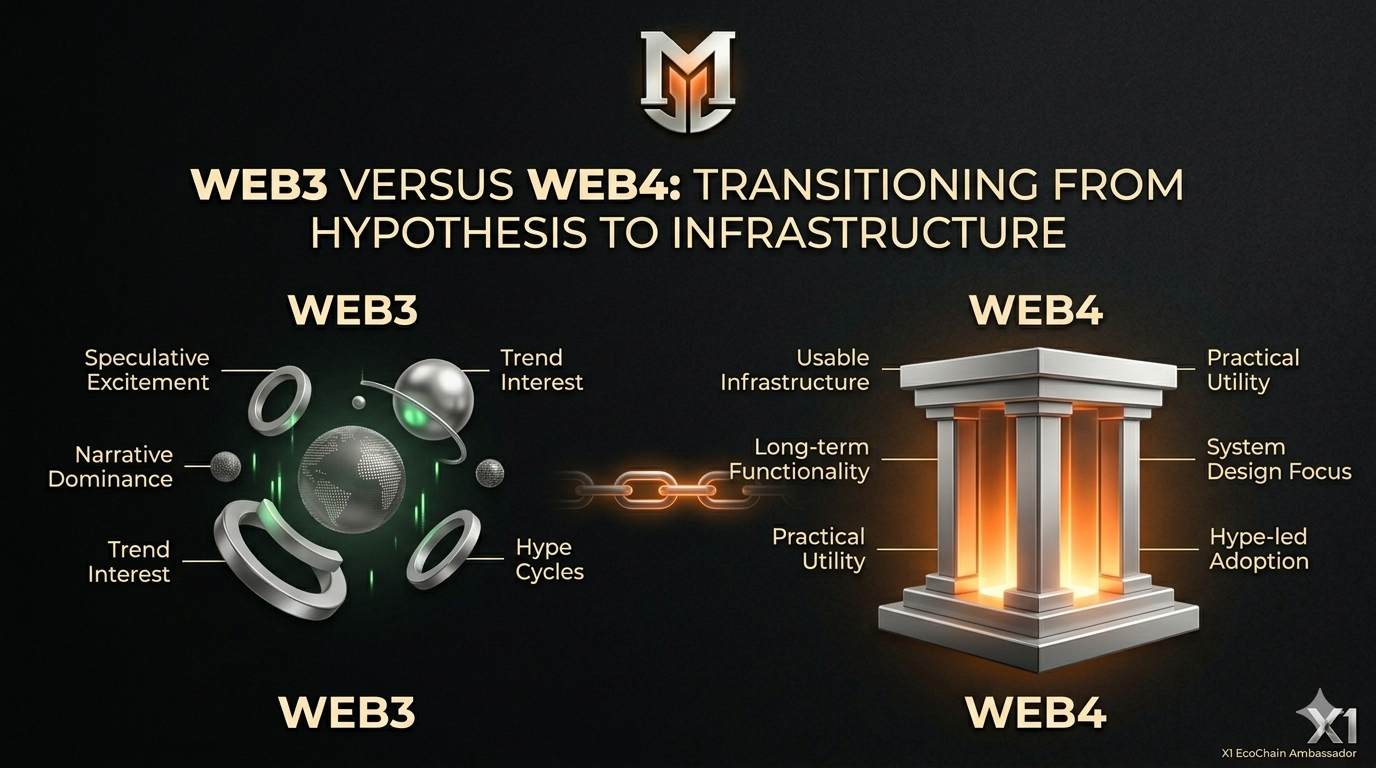
The easiest way to understand Web4 is to compare it with the dominant way people have understood Web3.
This does not mean Web3 was useless.
It means the conversation needs to evolve.
Web3 helped people think differently about ownership, decentralization, and digital value.
But if decentralized systems are going to matter in the long run, they need to become more than talking points. They need to become infrastructure that people can understand, trust, and eventually use meaningfully.
That is where Web4, as I use the term, becomes useful.
Why X1 EcoChain is part of this conversation
When I talk about Web4, one of the projects I reference is X1 EcoChain.
The reason is not that I want people to repeat a name.
The reason is that it gives a concrete example of the kind of conversation I believe matters.
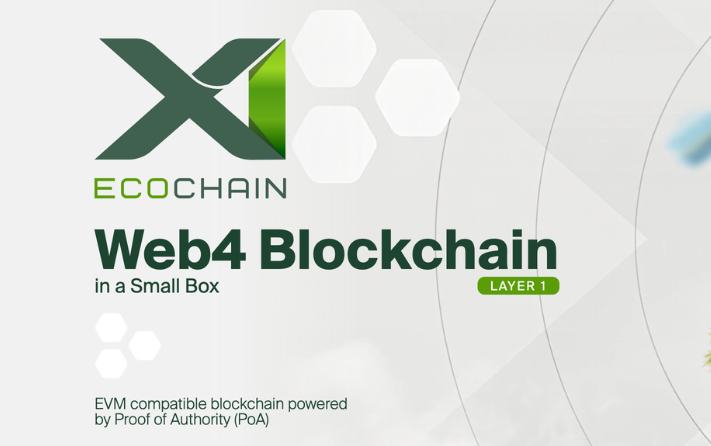
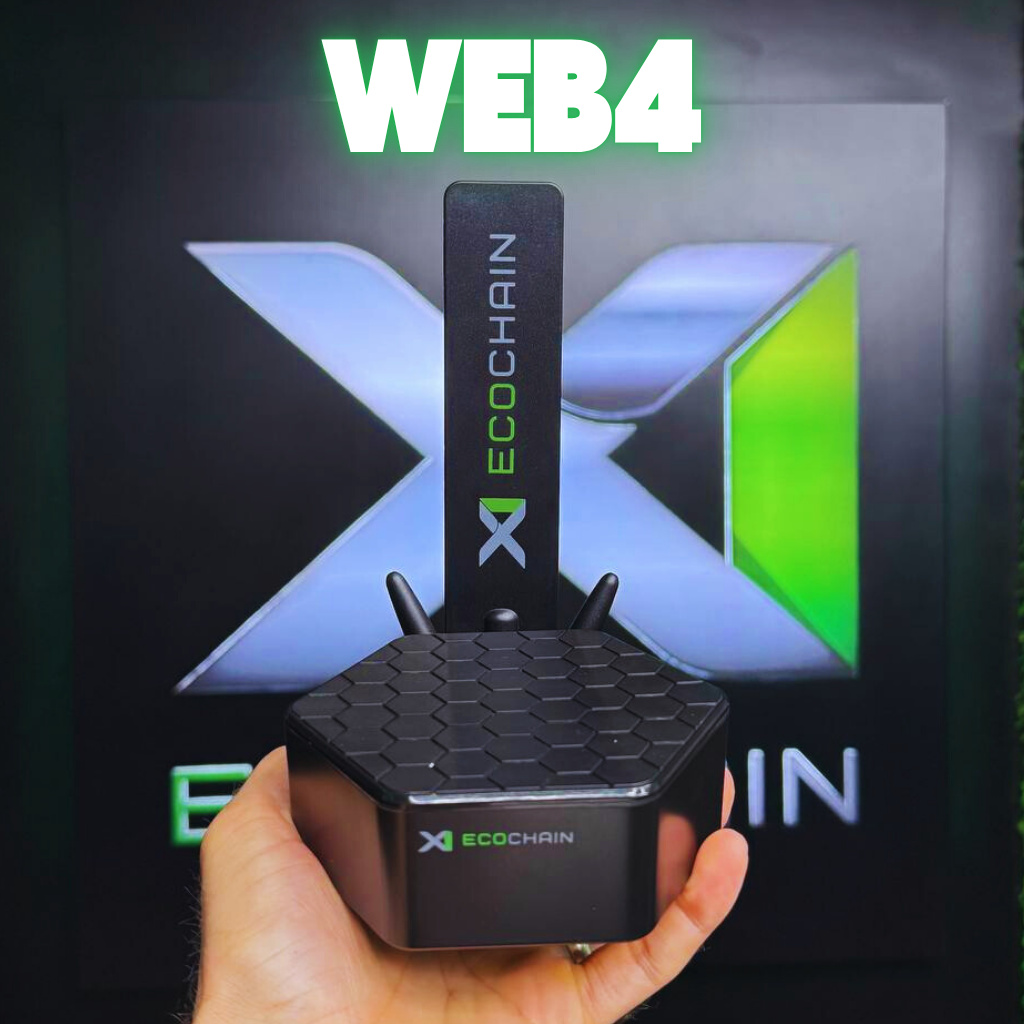
According to its public positioning, X1 EcoChain presents itself as an EVM-compatible Layer 1 blockchain built on Proof of Authority, low-power nodes, energy efficiency, and a broader, infrastructure-focused ecosystem model.
That matters because it shifts the conversation toward practical design.
Instead of asking only whether something sounds exciting, we can ask deeper questions.
What kind of blockchain architecture is being proposed?
How does energy efficiency fit into the long-term picture?
What does low-power deployment change?
How might that influence accessibility, ecosystem growth, or real utility?
These are the kinds of questions people should be asking more often.

Why energy efficiency matters more than many people think
One reason infrastructure projects deserve serious attention is that efficiency is not a cosmetic issue.
It affects cost, sustainability, scalability, and perception.
As decentralized systems grow, the conversation cannot remain trapped in a mindset that separates technical ambition from practical responsibility.
If a network wants to support real-world adoption, energy use, accessibility, operational design, and ecosystem usability all become part of the bigger picture.
That is one of the reasons X1 EcoChain is an interesting reference point in the Web4 discussion. Its public narrative highlights efficiency and low-power deployment as core parts of the model, not secondary details.
Whether someone is technical or not, that shouldn’t matter.
Because it shows that the conversation is moving beyond “what token exists” and toward “what kind of system is actually being built.”
Why do most people still misunderstand the shift
Most people still look at blockchain from the outside.
They see headlines.
They see prices.
They see influencers.
They see dramatic claims.
And naturally, they assume the whole space is built on speculation.
Part of that reaction is understandable.
But it also means many people miss the deeper layer.
They miss the builders.
They miss the infrastructure.
They miss the systems that are trying to solve real technical and organizational problems.
They miss the difference between noise and architecture.
That is why education matters so much in this space.
Because without explanation, people either become blindly excited or blindly dismissive.
Neither response is useful.
What is useful is clarity.
Why this matters for businesses, not only crypto enthusiasts
A lot of people assume that blockchain conversations matter only to traders, speculators, or deeply technical communities.
I do not believe that is true.
Businesses, founders, and non-technical decision-makers also need clarity here.
Not because every business should suddenly adopt blockchain.
But because more and more industries will be exposed to new infrastructure models, tokenization frameworks, digital ecosystems, and decentralized platforms.
If leaders do not understand the language, they will either ignore important shifts or be misled by false signals.
That is exactly why I focus so much on explanation.
My goal is not to tell every business to move into blockchain.
My goal is to help people understand when something is relevant, when it is not, and how to think more clearly before they commit time, resources, or attention.
Through Manoli Consulting, my role is not to pressure people.
It is not to force conclusions.
And it is not to pretend that every project deserves trust.
My role is to help people understand what they are looking at.
To simplify complex ideas.
To translate technical language into practical meaning.
And to help people ask better questions.
When I speak about Web4 and about projects like X1 EcoChain, I want the conversation to become more intelligent, more grounded, and more useful.
Because the future of decentralized technology will not belong to the loudest voices.
It will belong to the systems that make sense.

Final thought
So what does Web4 mean?
For me, it means this:
A move away from hype and toward infrastructure.
A move away from empty slogans and toward systems.
A move away from speculation as the only lens, and toward utility, design, and long-term relevance.
That does not mean every project claiming that the future will succeed.
It means people need a better framework for understanding what is being built.
And that is exactly why this conversation matters.
If we want to understand where decentralized technology is really going, we need to stop asking only what is trending.
We need to start asking what kind of infrastructure is being built underneath it.
That is where the real story begins.
If you want a clearer understanding of Web4, X1 EcoChain, or how decentralized infrastructure is evolving, you can explore more articles on Manoli Consulting or book a clarity call.


Tagged web4